Product Description
Working of a Biological Sewage Plant
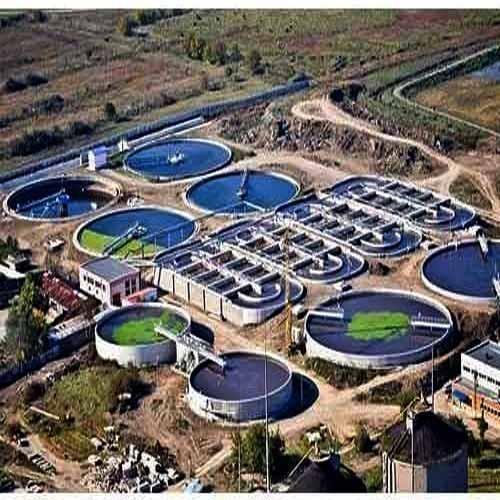
The basic principle of the working of a biological treatment plant is decomposition of the raw sewage. This process is done by aerating the sewage chamber with fresh air. The aerobic bacteria survive on this fresh air and decompose the raw sewage which can be disposed of in the sea. Air is a very important criterion in the functioning of the biological sewage plant because if air is not present, it will lead to the growth of anaerobic bacteria, which produces toxic gasses that are hazardous to health.Also, after decomposition of the sewage with anaerobic bacteria, a dark black liquid causes discoloration of water which is not accepted for discharging. Thus in a biological sewage treatment plant, the main aim is to maintain the flow of fresh air.
Division of Processes
The biological sewage plant is divided into three chambers:-
Aeration chamber
This chamber is fed with raw sewage which has been grinded to form small particles. The advantage of breaking sewage in small particles is that it increases the area and a high number of bacteria can attack simultaneously to decompose the sewage. The sewage is decomposed into carbon dioxide, water, and inorganic sewage. The air is forced through the diffuser into the air chamber. The pressure of air flow also plays an important role in decomposition of the sewage. If pressure is kept high then the mixture of air and sewage will not take place properly and it will escape without doing any work required for decomposition. It is for this reason; controlled pressure is important inside the sewage treatment plant as this will help in proper mixing and decomposition by the agitation caused by air bubbles. Generally, the pressure is kept around 0.3-0.4 bars.
Product Details:
|
Power Source
|
Electronic
|
|
Automation Grade
|
Automatic
|
|
Impurities to be removed
|
Oil and Grease,pH,Turbidity,TDS,Dissolved Minerals
|
|
Capacity
|
5 kld
|
|
Water Pump Power
|
1 kW
|
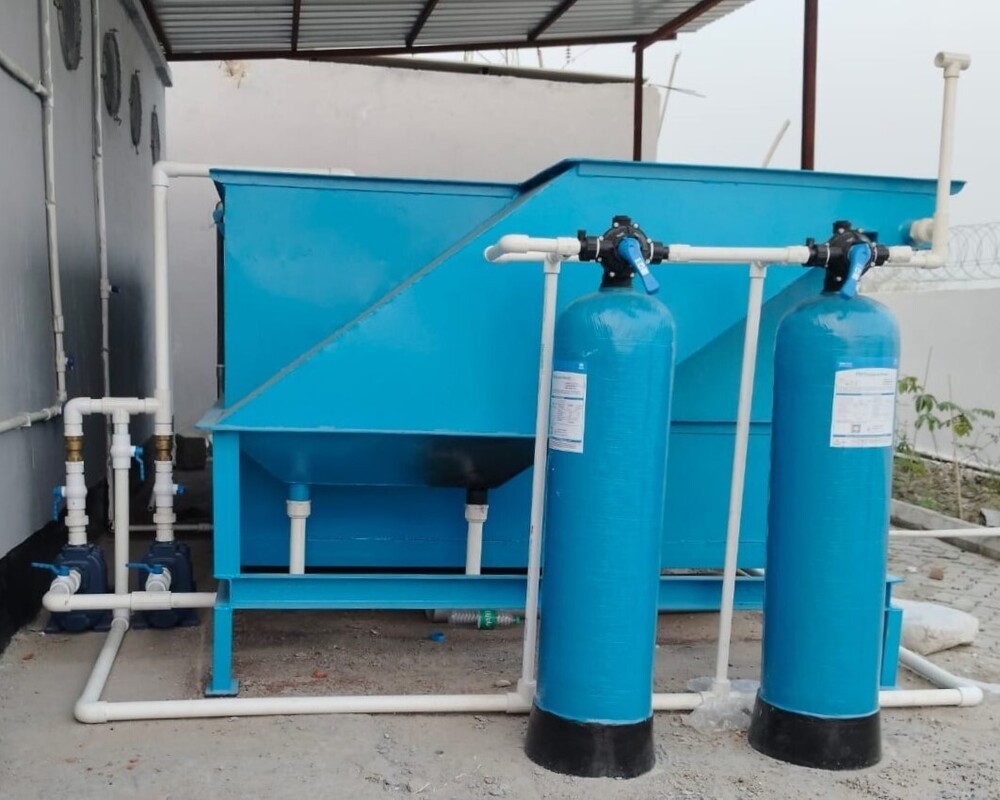
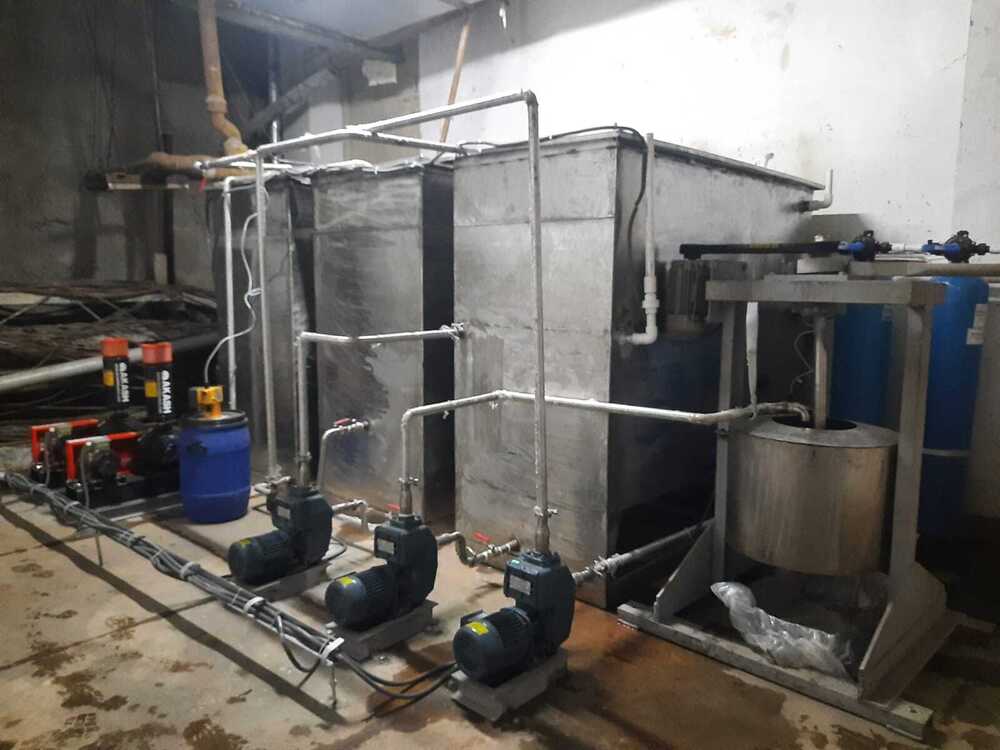
Advanced Treatment TechnologyThis containerized sewage treatment plant utilizes Moving Bed Biofilm Reactor (MBBR) and the Activated Sludge Process for robust pollutant removal. Its innovative approach offers reliable performance across varying wastewater loads while maintaining a small footprint, making it ideal for constrained urban and industrial sites.
High Efficiency, Low MaintenanceEngineered for efficiency, the plant achieves over 90% BOD removal and maintains outlet TSS and COD well within CPCB norms. Automatic screening, grit removal, and PLC-based controls reduce manual intervention, while features like chlorination and epoxy coating enhance operational longevity and corrosion resistance.
FAQs of Sewage Treatment Plant:
Q: How does the sewage treatment plant achieve such high BOD and COD removal efficiency?
A: The plant uses a combination of Moving Bed Biofilm Reactor (MBBR) and Activated Sludge Process technologies, allowing for increased contact between microorganisms and wastewater. This maximizes the biological breakdown of organic matter, resulting in more than 90% BOD removal and COD reduction from up to 600 mg/L to below 60 mg/L.
Q: What is the main process used in this sewage treatment plant?
A: The primary treatment process is the Activated Sludge Process, augmented by MBBR technology. Pre-treatment includes automatic screening and grit removal, followed by biological treatment and final disinfection by chlorination.
Q: When is routine maintenance required for this semi-automatic system?
A: Although designed for low maintenance thanks to automation, routine checks on mechanical components, periodic sludge removal from the 7 m holding tank, and inspection of membranes and pumps should be conducted as per the manufacturers scheduletypically every few months or as specified in operational manuals.
Q: Where can this sewage treatment plant be installed?
A: This containerized STP is suitable for industrial and municipal sites across India. Its compact 20 m footprint and robust construction make it ideal for areas with limited space, ensuring easy installation in both new and existing facilities.
Q: What are the key benefits of using this sewage treatment plant?
A: The plant delivers regulatory-compliant effluent, safeguarding water bodies and infrastructure. Its compact design, PLC-based controls, semi-automatic operation, and durable, epoxy-coated construction ensure reliable, efficient performance with minimal manual intervention and operational downtime.
Q: How does the PLC-based control system enhance plant operation?
A: The PLC-based control system enables semi-automatic monitoring and management of all critical functions, reducing the risk of human error, optimizing process efficiency, and facilitating timely alarms for maintenance issues or operational adjustments.
Q: What disinfection method is used, and why is it effective?
A: Chlorination is employed for disinfection, effectively destroying pathogens in the treated effluent. This widely used method ensures that the final water quality meets or exceeds CPCB standards before discharge or reuse.










 : 09339603256
 Send Inquiry




 Send Inquiry